Disclosure: Top Local Diner is reader-supported. When you buy through links on our site, we may earn an affiliate commission. Learn more.
There is a silent war waged on griddles across the Midwest: the battle between the classic cheeseburger and the patty melt. While a burger relies on a soft bun and fresh toppings, the patty melt is a masterful exercise in griddled, caramelized unity. Let's break down the anatomy of this perfect sandwich.
The Bread: Sturdy Rye
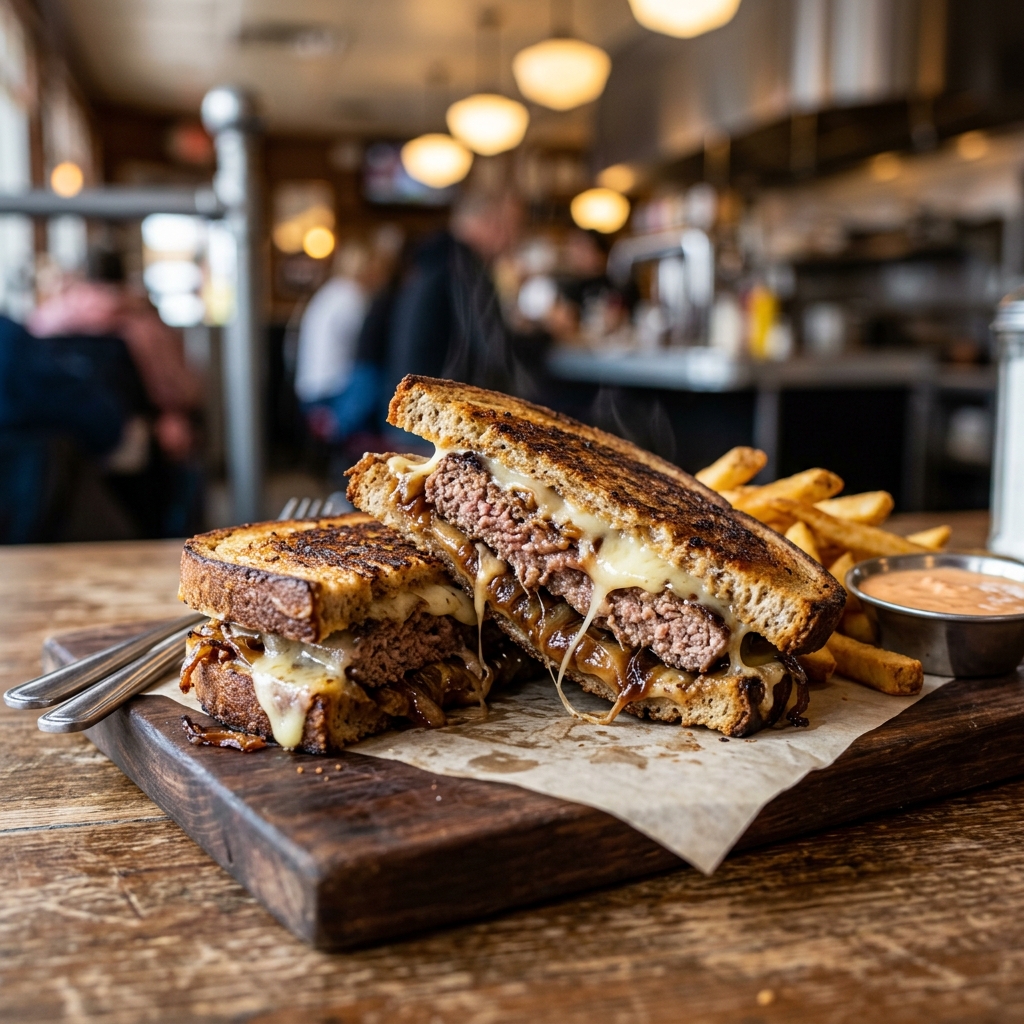
A patty melt cannot exist on a hamburger bun. It demands the structural integrity and slight tang of rye bread (or occasionally, a thick-cut sourdough). The bread must be aggressively buttered and griddled to a golden, crisp finish that holds up to the grease and melted cheese without disintegrating.
The Beef: Smashed and Seared
Unlike a thick pub burger, a patty melt requires a thinner, wider patty. The goal is maximum surface area for a hard, dark-brown crust formed on a flat-top grill. The patty should span to the very edges of the rye bread, ensuring beef in every single bite.
The Onions: Low and Slow
Raw onions have no place here. A true patty melt relies on deeply caramelized onions. Cooked low and slow until they turn a jammy, dark mahogany, these onions provide the essential sweetness needed to balance the rich beef and savory cheese.
The Cheese: Swiss vs. American
While American cheese offers unparalleled meltability, Swiss cheese brings a necessary nutty sharpness that complements the rye bread. The best diners often compromise by using a slice of both, acting as a molten glue that binds the entire sandwich together.
About the Author
Sarah is a culinary historian who spends her time tracing the origins of classic American comfort food and diner culture.