Disclosure: Top Local Diner is reader-supported. When you buy through links on our site, we may earn an affiliate commission. Learn more.
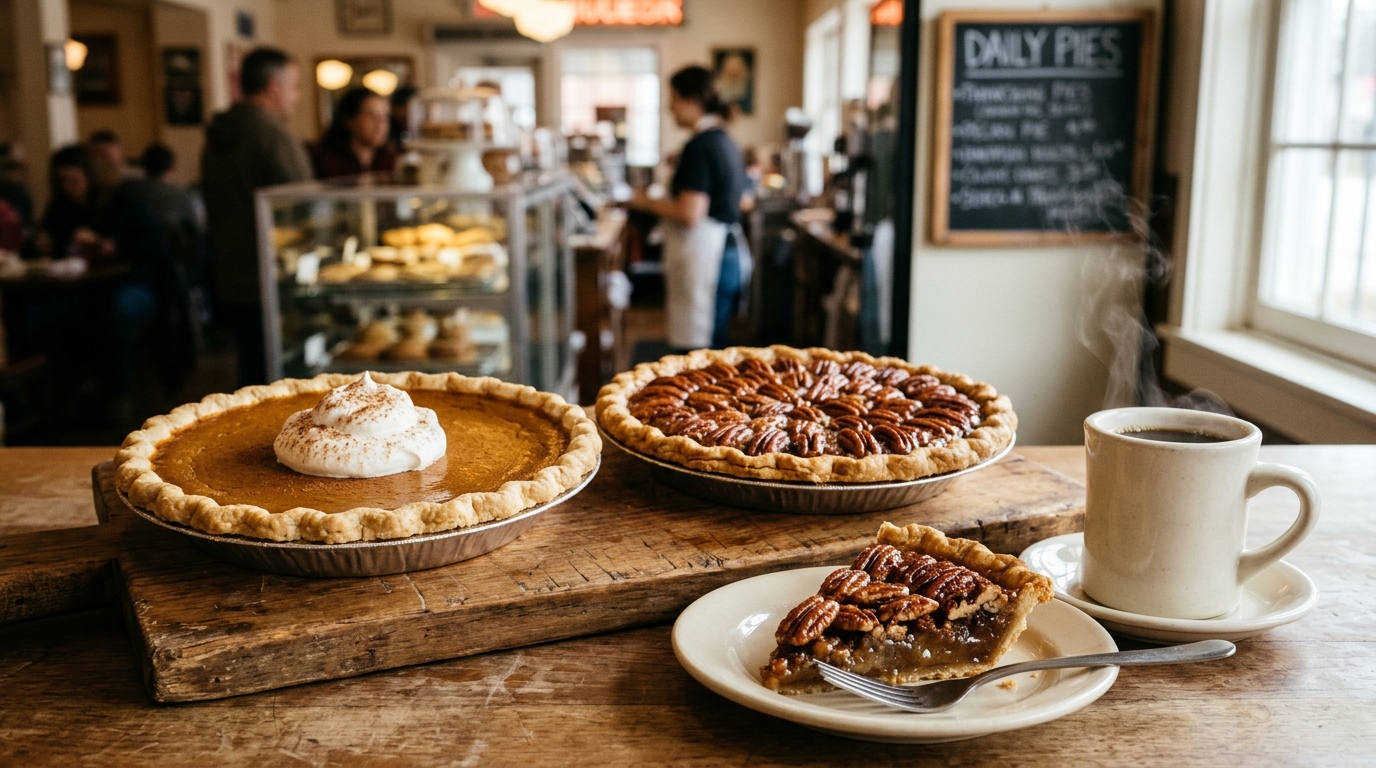
Walk into any classic American roadside diner from New England to Texas and your eyes go straight to the illuminated glass pie case by the register. More than any other dessert, pie is the architectural monument of American comfort food, and Thanksgiving is its high holy day. While apple and cherry hold court all year long, late November belongs to two distinct custard pies: spiced pumpkin and toasted southern pecan. Despite their simple ingredient lists, both pies are notorious for humbling home bakers. Pumpkin pies frequently emerge from the oven with a deep canyon cracked across the center and a wet, pasty bottom crust, while pecan pies either set into a tooth achingly sweet brick or spill across the pie plate in a runny puddle when sliced. Understanding the custard chemistry and bakery techniques behind these two classics will guarantee flawless slices, whether you are rolling dough at home or ordering from your neighborhood diner.
1. The Surprising History of America's Two Holiday Pies
Pumpkin and pecan pies arrived on the American Thanksgiving table from opposite ends of the country and nearly two centuries apart. Early New England settlers cooked stewed squash with milk, honey, and spices inside hollowed pumpkin shells long before cast iron ovens were common in colonial kitchens. By 1796, Amelia Simmons published the first printed American cookbook in Hartford, Connecticut, featuring two recipes for "pompkin pudding" baked in pastry crust that closely resemble the spiced custard we eat today. When Sarah Josepha Hale campaigned for decades to make Thanksgiving a national holiday in 1863, she framed pumpkin pie as the non negotiable symbol of northern domestic tradition.
Pecan pie, by contrast, is a much younger southern invention born from the native pecan groves of Texas, Louisiana, and Georgia. While nineteenth century southern cooks baked pecan custards sweetened with cane syrup or molasses, the modern pie took over the country in the 1930s when corporate test kitchens printed a simple recipe on corn syrup bottles combining eggs, butter, sugar, vanilla, and pecans. In the decades since, artisan bakers and southern diner cooks have reclaimed the pie by swapping plain corn syrup for dark cane syrup, brown butter, bourbon, and flaky sea salt to balance its intense sweetness.
2. Why Canned Squash Beats Carving a Jack O' Lantern
Every autumn, well meaning cooks spend hours roasting, peeling, and puréeing fresh sugar pie pumpkins, only to discover that their homemade pie tastes watery and fibrous compared to one made from a simple grocery store can. There is a straightforward botanical reason for this.
Most ornamental pumpkins belongs to the species Cucurbita pepo, which was bred for tough rinds, hollow cavities, and stringy flesh with over 90 percent water content. Commercial canned pumpkin purée is actually made from Dickinson squash, a variety of Cucurbita moschata closely related to butternut squash. Dickinson squash has dense, deep orange flesh packed with natural sugars and dry starch. Furthermore, commercial processors steam the squash and pass it through industrial finishers that remove excess water prior to canning.
The Caramelized Purée Technique
Whether you use pure canned pumpkin or roasted Honeynut and kabocha squash puréed at home, never whisk the cold purée straight into your eggs and cream. Spread the pumpkin purée in a wide stainless steel skillet with your brown sugar, cinnamon, ginger, nutmeg, and cloves over medium heat. Cook the mixture while stirring with a heatproof spatula for five to six minutes until it darkens slightly and leaves a dry film on the bottom of the pan. Cooking the purée accomplishes three critical tasks at once: it evaporates excess moisture that would otherwise make the crust soggy, it caramelizes the natural squash sugars, and it blooms the fat soluble essential oils inside your dried spices.
3. Custard Physics: Preventing Cracks and Runny Centers
A deep crack down the center of a pumpkin pie is the hallmark of overcooked egg proteins. Egg proteins begin to coagulate around 160°F and form a delicate, moisture trapping mesh at 175°F. Once the internal temperature of a custard climbs past 185°F, those protein strands squeeze tightly together like a wrung sponge, expelling water and shrinking rapidly. As the custard contracts while cooling, the surface tears open.
The secret used by professional pastry chefs is the wobble test paired with an instant read thermometer. Bake your pumpkin pie at a gentle 350°F inside a par baked crust. Open the oven door and nudge the pie plate gently: when the outer two inch ring of the filling is puffed and set, but the very center two inch circle still jiggles like soft gelatin (and registers 175°F on a digital thermometer), pull the pie immediately. Residual heat held inside the heavy pie plate will finish setting the center smoothly as it cools on a wire rack over the next two hours.
Fixing the Pecan Pie Gel Point
Pecan pie obeys the opposite rule. Because its filling contains a high concentration of sugar syrup, the sugar interferes with egg protein bonding and raises the coagulation temperature. For a pecan pie to slice cleanly without weeping syrup onto the plate, its center must reach 200°F. If the center is pulled below 195°F, the egg network never finishes locking around the syrup. Always toast your pecan halves on a sheet pan at 350°F for eight minutes before folding them into the filling; raw pecans taste grassy and soft, whereas pre toasted pecans stay crisp even after swimming in brown butter custard.
4. How to Spot a Great Bakery or Diner Pie Before Ordering
If you are delegating pie duty to a local bakery, farm stand, or neighborhood diner this Thanksgiving, knowing what to look for ensures you bring home a true scratch made centerpiece rather than a thawed commercial shell.
| Quality Signal | Scratch Made Bakery / Diner Pie | Mass Produced Commercial Pie |
|---|---|---|
| Edge Crimp & Rim | Irregular, hand fluted crimp with visible blisters and golden brown butter spots | Uniform machine stamped ridges with pale, monochrome beige coloring |
| Pan Material | Heavy gauge aluminum, ceramic, or deep dish glass plate | Ultra thin, flimsy foil tin that bends with one hand |
| Pumpkin Filling Color | Deep burnt orange or russet mahogany from caramelized squash and whole spices | Bright, pale neon orange with uniform flat surface |
| Pecan Coverage | Packed wall to wall with whole toasted pecan halves suspended in dark amber custard | Thin single layer of pale pecans floating atop clear, overly sweet jelly |
| Aroma & Dairy | Rich notes of real butter, vanilla bean, and warm clove; requires refrigeration | Shelf stable at room temperature for a week due to shortening and preservatives |
Master Recipe: Brown Butter Bourbon Pecan Pie with Flaky Crust
This diner tested pecan pie cuts the cloying sweetness of standard recipes by using toasted pecans, nutty brown butter, dark brown sugar, a splash of bourbon, and flaky sea salt.
Ingredients
- 1 single crust all butter pie dough, chilled in a 9 inch pie plate and par baked
- 2.5 cups (about 10 oz) whole pecan halves
- 6 tablespoons unsalted butter
- 3/4 cup packed dark brown sugar
- 3/4 cup pure dark cane syrup, golden syrup, or dark corn syrup
- 3 large eggs plus 1 large egg yolk, room temperature
- 2 tablespoons Kentucky bourbon (or 1 tablespoon apple cider vinegar for non alcoholic balance)
- 2 teaspoons pure vanilla extract
- 1 tablespoon all purpose flour
- 3/4 teaspoon kosher salt, plus flaky sea salt for finishing
Instructions
Toast the Pecans: Preheat your oven to 350°F with a baking steel or heavy sheet pan on the lower middle rack. Spread the pecan halves on a separate baking sheet and toast for 8 minutes until fragrant. Cool slightly, roughly chop half of the pecans, and leave the other half whole.
Brown the Butter: Melt the 6 tablespoons of butter in a small light colored saucepan over medium heat. Swirl the pan as the butter foams and crackles for 4 to 5 minutes until golden brown milk solids form at the bottom and release a toasted hazelnut aroma. Pour into a mixing bowl and let cool for 10 minutes.
Whisk the Custard: Whisk the dark brown sugar, cane syrup, flour, and kosher salt into the warm brown butter until smooth. Add the eggs and extra yolk one at a time, whisking gently so you do not whip excess air bubbles into the custard. Stir in the bourbon and vanilla extract.
Fill the Crust: Scatter the chopped pecans across the bottom of the warm par baked pie shell, then arrange the whole pecan halves on top. Slowly pour the brown butter custard over the nuts, pressing them down gently with the back of a spoon so every pecan gets coated in glaze.
Bake to 200°F and Cool Completely: Place the pie on the preheated baking sheet on the lower middle rack and bake at 350°F for 50 to 55 minutes until the edges are puffed and the center registers 200°F on an instant read thermometer. Sprinkle with flaky sea salt and cool on a wire rack for at least 4 hours before slicing.
Explore More
The Takeaway
Both pumpkin and pecan pies are egg custards disguised as holiday desserts: pull pumpkin pie when the center two inches still jiggle like gelatin at 175°F, toast your pecans before baking, and always blind bake your bottom crust on a preheated steel or lower oven rack.
About the Author
Sarah is a culinary historian who spends her time tracing the origins of classic American comfort food and diner culture.